Audubon Christmas Bird Count 2011-2012
categories: Cocktail Hour / Getting Outside
5 comments
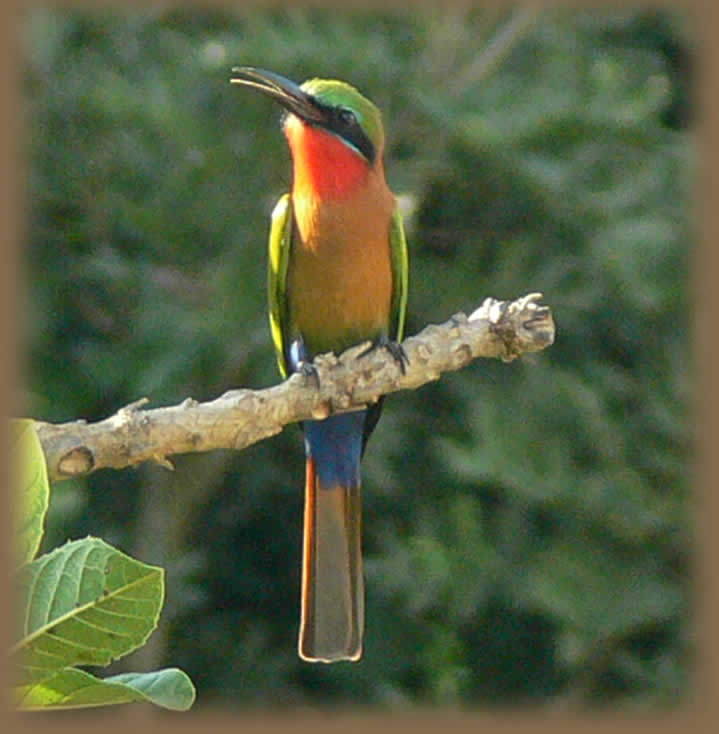
I saw this rainbow bee-eater in Australia, and in my dreams at naptime, but not during the X-mas bird count this year.
This year marks the 112th Audubon Christmas bird count. It was begun in 1900 by my hero Frank M. Chapman to replace the Christmas bird hunt, wherein teams of well-heeled sharpshooters went out on Christmas day to see who could destroy the most birds, which they did in the millions. Even then declining populations of birds had conservationists (if not conservatives) concerned. The bird count caught on, and the deadly version of the hunt ended.
#
Last year, according to the Audubon Society count summary, “All counts combined tallied 61,359,451 birds; 57,542,123 in the United States, 3,355,759 in Canada, and 461,569 in Latin America, the Caribbean, and the Pacific Islands species totals were impressive as well. In the United States during the 111th count, the total tally was 646 species, plus an additional 45 field-identifiable forms.” These numbers can be used to spot trends, find trouble spots, and Continue reading →

My Wind Journey
categories: Cocktail Hour
1 comment
 Bill gave us his take on wind energy not long ago. Here is mine, published this week on my NRDC blog (yes, I’m double dipping): David Gessner’s ‘Wild Life’.
Let’s start with love. A good place to start, yes? In this case love of a place and love of a book. The book is Walden by Henry David Thoreau, which I read as a young man, and the place is Cape Cod, or, more specifically, the East Dennis beaches I have been coming to since I was very young. My love of those beaches is, at first, a young man’s love, but later it grows into something deeper. Inspired in part by Thoreau’s book, I move there after college and work part-time as a carpenter while writing my own first book. Though I have now lived all over the country, it is still the first place I think of when people mention “home.” It is my Walden and Cape Cod Bay is my Walden Pond.
So of course when someone — a businessman no less — suggests that he wants to place 130 wind turbines — bird-killing turbines! — in Nantucket Sound off the shores of my Walden, I react with outrage. Not in my backyard? Not in my backyard! This is a sacred place, a place apart, and if this is a sacred place then these wind turbines are, as I tell anyone who will listen, a desecration. Continue reading →
Bad Advice Wednesday: Don’t be Stupid
categories: Bad Advice / Cocktail Hour
31 comments
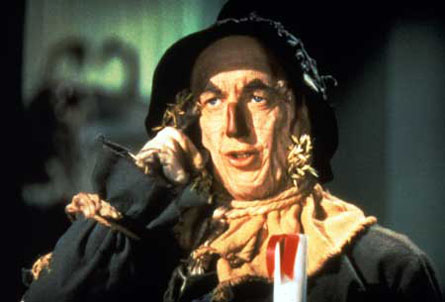 One thing I’ve noticed about good writers, even the most demotic, even the most seemingly down to earth and simple-hearted, even (god help us), the raving right wingers: they’re pretty smart. So that’s this week’s bad advice for writers: Don’t be stupid.
#
For example, don’t have the phrase “legs akimbo” in the first paragraph (or any other paragraph) of your short story, as a fellow hoping to work with me in private study recently did. Because if you use the phrase “legs akimbo” in the first paragraph of your submission, I will stop reading. Continue reading →
Table for Two: an Interview with Maureen Stanton
categories: Cocktail Hour / Table For Two: Interviews
Comments Off on Table for Two: an Interview with Maureen Stanton
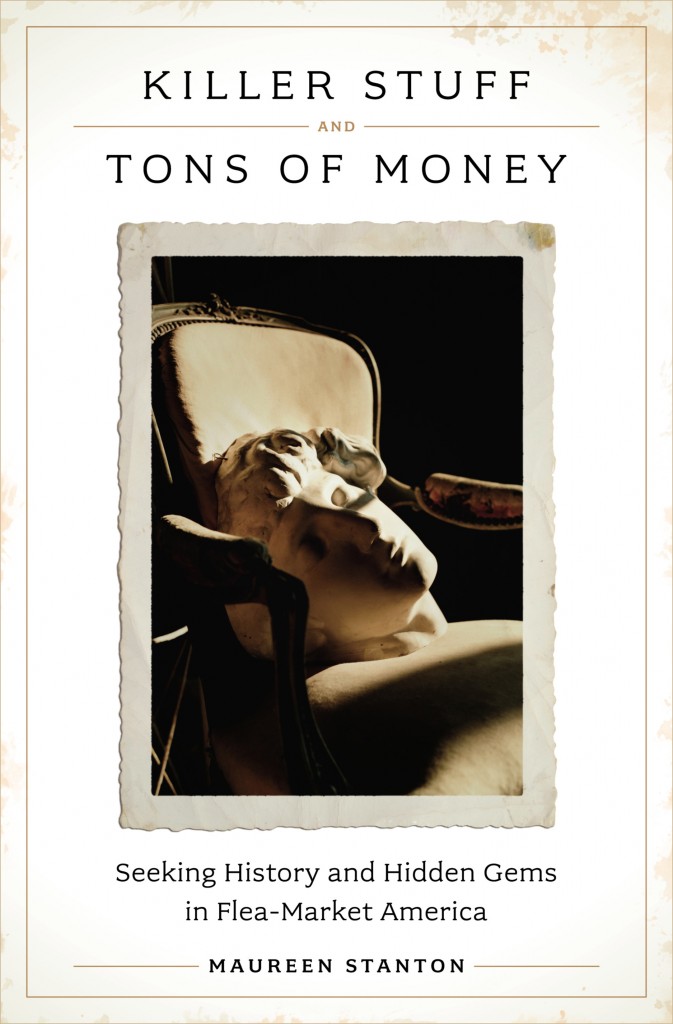 Today I’m going to meet Maureen Stanton, a native New Englander (or Massachusetts, anyway, good enough, and not her fault) whose first book, Killer Stuff and Tons of Money, was published this past summer by Penguin. It’s a work of anthropology as much as it’s anything, with a deep look at the psychology, the social dynamics, and the caveman economics of flea market and antiquing culture. The book soars way beyond the multiple TV shows on the subject, which tend to focus on objects more than people, on dollars and cents rather than the mechanics of deals made on folding tables and in barns. And don’t forget the Internet. Maureen teaches at Missou, now, the University of Missouri, in Columbia, Missouri, and though this is a virtual meeting that could have taken place anywhere (Paris would have been nice, with its vast and famous flea markets—Les Puces, par example!—or in Georgetown, Maine, where Mo lives in summer, only a couple of hours from here, and Maine practically a flea market on its own), I find myself at Shotgun Pete’s BBQ Shack, at 701 Business Loop I-71 W, hardly a romantic address. Continue reading →
Cover Me (Part III)
categories: Cocktail Hour
3 comments
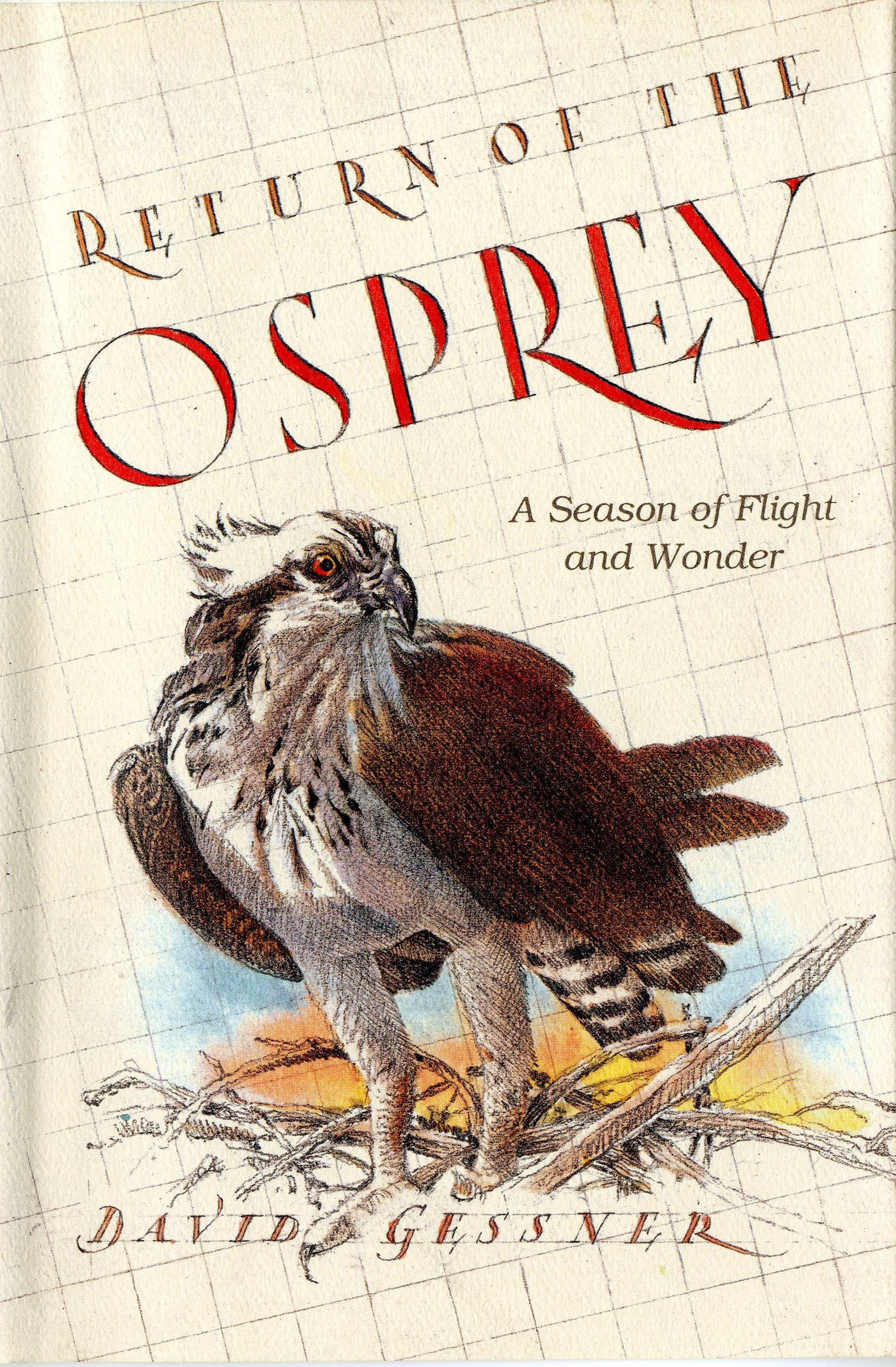 Today’s sad and unexpected news combines elements of our last two posts. The news is of the death of Dugald Stermer, who was many things during his varied career, including the editor of the radical 60s magazine, Ramparts. He was also a stunning artist. One of my favorite of his drawings was the cover he did for my book, Return of the Osprey. He also drew a bird in flight for the back, and as an added touch he painted an osprey egg for the back flap. These drawings alone give you a sense of craftsmanship, dedication, and grace he brought to all his work. We need more human beings like Dugald Stermer on this planet. He will be sorely missed.
Here’s a link to today’s obituary in The New York Times.
Cover Me (Part II)
categories: Cocktail Hour
1 comment
Here’s a few of the possible covers that the designer came up with for The Tarball Chronicles. Below is an interesting link where he tells the story of finding the right cover. (And I do think it’s the right cover.)


Guest contributor: John Lane
Bad Advice Wednesday: A List From John Lane
categories: Cocktail Hour
8 comments
John Lane’s Bad Advice
1. Don’t follow your bliss.
2. Don’t always write about what you know.
3. Never believe there’s a light at the end of the tunnel.
4. Don’t wait for the Luck Bus.
5. Never expect a promotion with that MFA.
6. Don’t invest in plastics in spite of the current nostalgia for Simon & Garfunkel.
7. Practice brevity, especially when it comes to introductions.
8. Ignore the prizes and dream only of swimming with Keats.
9. As Isaac Denison so famously said, Write every day without hope and without despair.
10. If you break it, you buy it.
11. Never lie about the truth.
12. Feelings can be rented. You don’t have to own them.
13. If you want to acquire a dog make it a low maintenance one.
14. The New Yorker’s jokes are better when the issues pile up.
15. Don’t believe there will be cell towers on Mt. Parnassus.
16. Yes, Kerouac did die unhappy, but his heirs are not.
17. Don’t buy too many envelopes, even if they are on sale.
18. If you purchase first class stamps make sure they are eternal.
19. “Don’t let it sleep in the house” doesn’t work with email.
20. ABC. Mamet’s “Always be closing.”
21. Save the few letters you get for any available archive.
22. What’s published on line stays on line.
23. Lay your dreams to rest and you’ll come in second.
24. Unlike yogurt, literature never expires.
25. There are only two types of river stories: upstream and down.
26. Talking animals are hard to pull off.
27. Read The Odyssey again.
28. Holiday stories usually disappoint.
29. Don’t call “Eleanor Rigby” a poem.
30. Measure twice and cut once still works.
Guest contributor: John Lane
Keep Hope Alive (In the South No Less)
categories: Cocktail Hour
2 comments
 John Lane is the author of many books, including two very recent ones, Abandoned Quarry, his new and collected poems, and My Paddle to the Sea, which the literary critic David Gessner has called “beautiful—full of contemplation, life-and-death, humor and derring-do.” John is going to be taking over grease cook duties here at Bill and Dave’s Bar and Grill for the next couple of days, including the offering below and tomorrow’s bad advice:
I know Dave is planning on writing about the west and Wallace Stegner in his next project and I just finished listening to Crossing to Safety, Stegner’s story of two academic couples who have been friends for fifty years, one couple is from the west and one from the east. This plot got me I’ve been thinking a lot about the differences between regions, particularly about my native south and every other region. I haven’t come to any profound conclusions, but I have formed some ideas. Continue reading →
Chester Greenwood Day: Our Parade
categories: Cocktail Hour / Don't Talk About Politics
4 comments
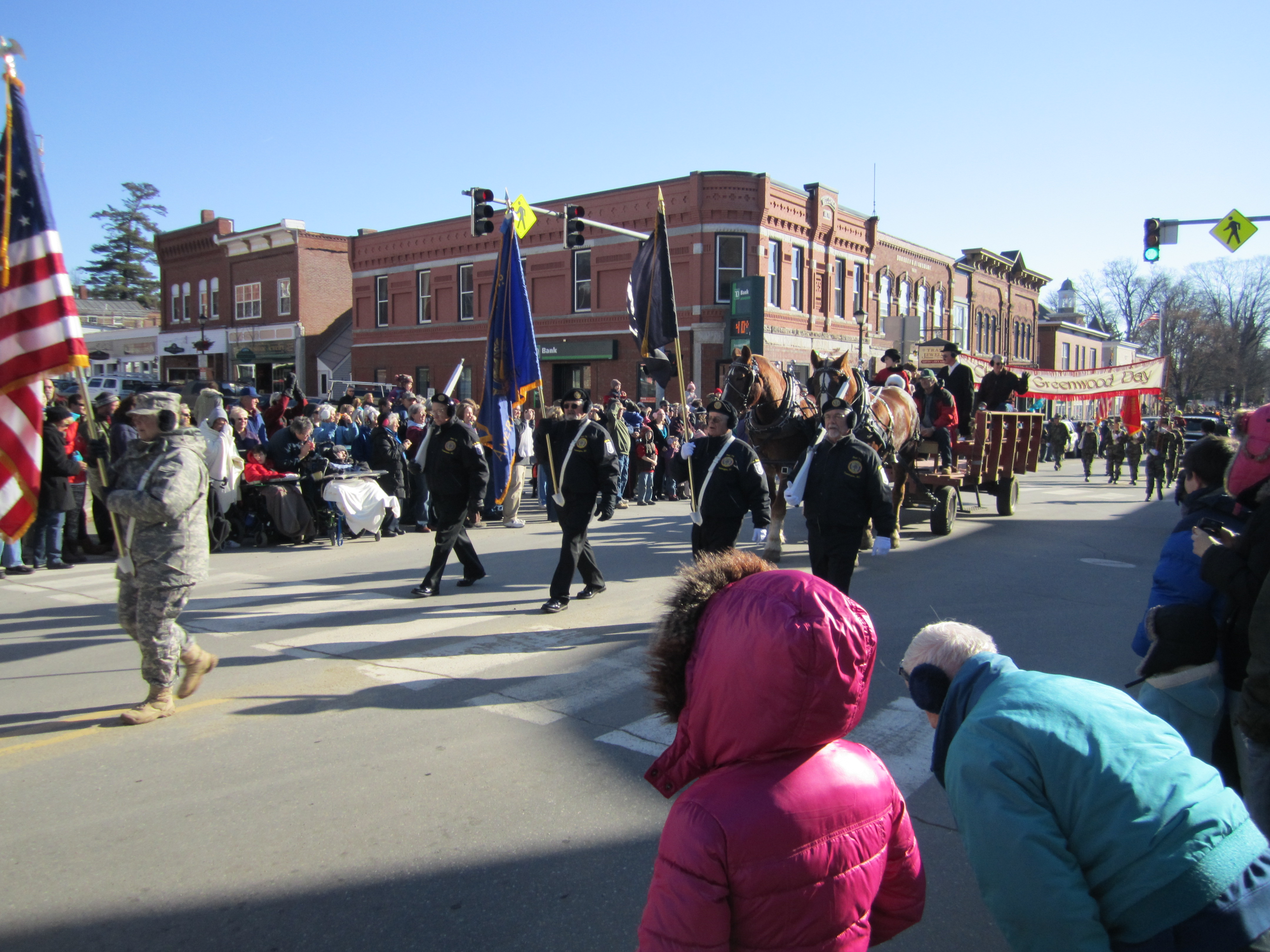
Broadway and Main
The first Saturday of December may be a lot of things a lot of places, but here in Farmington, Maine, it’s Chester Greenwood Day, and we have a parade. It’s not quite the Macy’s Thanksgiving Day parade (which I wrote about last week), maybe two blocks worth, but it’ll do!
Chester Greenwood invented the earmuff, among other things, and almost anyone in town can tell you how it happened: he loved to skate as a young teen, 1873, but his ears got cold. He wrapped his woolen scarf around his head, but that was too itchy and uncomfortable, so he got his grandmother to sew circles of beaver pelt on a metal frame he’d fashioned, and (as a French-challenged college student of mine once wrote): wallah! Continue reading →

Guest contributor: Burns Ellison
Poker with Nelson Algren
categories: Cocktail Hour
5 comments
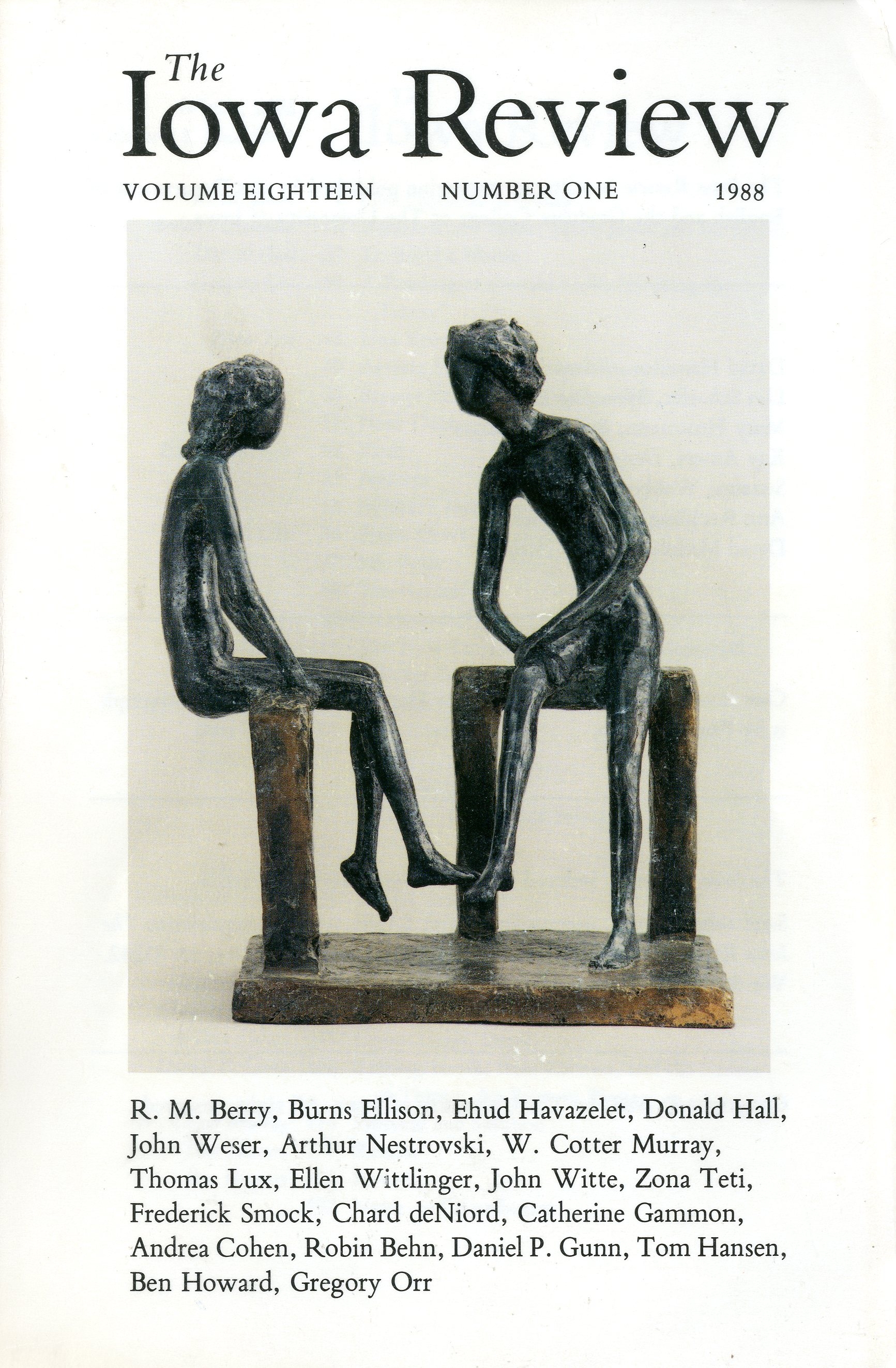 My old friend, Burns Ellison, is our featured guest this week. Burns and I met in grad school twenty years ago and this week he writes about a time–long before we met–when he played poker with Nelson Algren. “The First Annual Nelson Algren Poker Game” is a great essay, one of my favorites, and he first published it in the Iowa Review in 1988. Since I don’t know a lot about Algren, I asked Peter Baker, who does, to write a short intro. Here it is:
At some point American letters forgot about Nelson Algren. If we hear about him at all, we hear two things: he wrote about Chicago, and he wrote about life’s losers and the dispossessed. Implicit–and sometimes explicit–in our Algren non-conversation is the notion that he was an unsophisticated writer of lefty agitprop. What has been forgotten is that Algren became early in his career–after, indeed, writing some unsophisticated lefty agitprop–a great American stylist, a man capable of bringing poetry to bear on his given subject, and insisting upon the humanity of those dehumanized by the state.
Burns Ellison puts Algren where he belonged: at the center of a young writer’s pantheon of idols. For Ellison, Algren was someone to learn from and to seek, however uncertainly, a place alongside. In relatively few pages, his essay gives as good a sense as any I’ve encountered of the way Algren made his way as a writer in the world. Here’s his essay: The First Annual N. A. Poker Game