Table for Two: Interview with Wes McNair
categories: Cocktail Hour / Table For Two: Interviews
2 comments
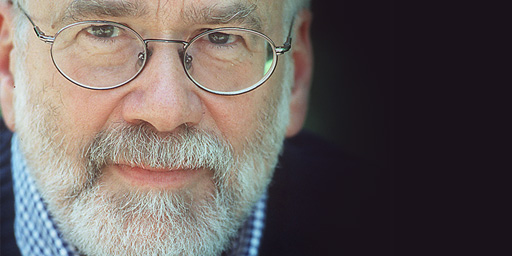
This coming Thursday, January 31, Wesley McNair will launch his new memoir, The Words I Chose: A Memoir of Poetry and Family, at the Portland Public Library in Portland, Maine, always a good venue for writers, now a great one in its new renovation. And a brilliant evening is planned. It wasn’t hard to imagine where Wes and I would sit for our pretend meal–the porch of his camp on Drury Pond in in Temple, Maine, where in fact we sit many a summer’s evening, talking, talking. Wes likes a beer and a whiskey. I just go for the whiskey. Continue reading →

Guest contributor: Johannes Lichtman
The Anatomy of a Hangover
categories: Cocktail Hour
5 comments
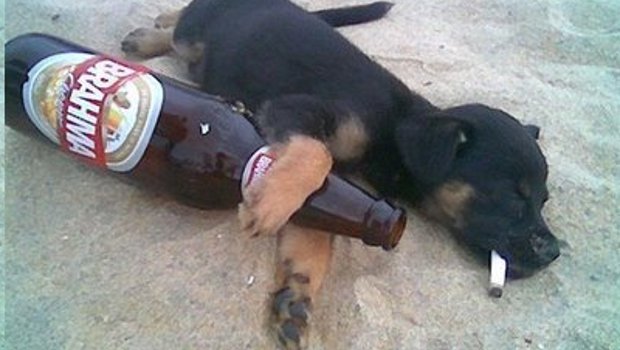 by special guest star Johannes Lichtman
“The reason why so many professional artists drink a lot is not necessarily very much to do with the artistic temperament, etc. It is simply because they can afford to, because they can normally take a large part of the day off to deal with the ravages.” –Kingsley Amis
The greatest hangover scene in literature? The Guardian claims it’s from Kingsley Amis’ Lucky Jim:
His mouth had been used as a latrine by some small creature of the night, and then as its mausoleum. During the night, too, he’d somehow been on a cross-country run and then been expertly beaten up by secret police. He felt bad.
A good hangover scene, no doubt. But Cormac McCarthy’s Suttree gives Amis a run for his money:
He woke with the undersides of his eyelids inflamed by the high sun’s hammering…His clothes cracked with a thin dry sound and shreds of baked vomit fell from him…He tried to swallow but his throat constricted in agony…staggering under the heat, his stomach curdling. He wandered into a narrow alley and fell to his hand and knees and began to vomit. Nothing would come but a thin green bile and then nothing at all, his stomach contracting in dry and vicious spasms that racked him and left him sweaty and shivering and weak when they ceased. Continue reading →

Guest contributor: Dinty W. Moore
Bad Advice Wednesday: Be Porous, Be Available
categories: Bad Advice / Cocktail Hour
9 comments
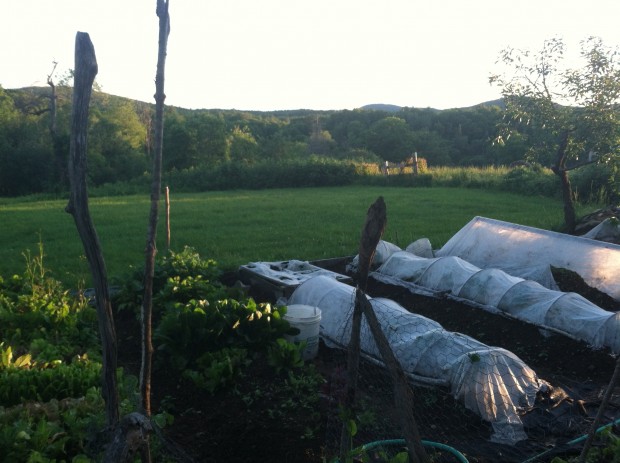
“A career is like a garden,” Bill Roorbach told me and a roomful of other eager writers nearly ten years ago at the 2004 Creative Nonfiction Summer Writers Conference at Goucher College. “There is only so much you can control. The beans won’t climb the pole until they’re ready, and sometimes the garden just evolves where it wants – you just step out of the way and fit yourself in.” Continue reading →
A Great Day
categories: Cocktail Hour
1 comment
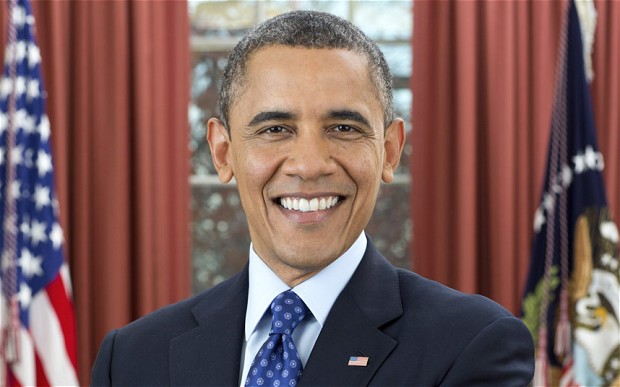
“For we, the people, understand that our country cannot succeed when a shrinking few do very well and a growing many barely make it. We believe that America’s prosperity must rest upon the broad shoulders of a rising middle class. We know that America thrives when every person can find independence and pride in their work; when the wages of honest labor liberate families from the brink of hardship. We are true to our creed when a little girl born into the bleakest poverty knows that she has the same chance to succeed as anybody else, because she is an American, she is free, and she is equal, not just in the eyes of God but also in our own. Continue reading →

Getting Outside Saturday: One-Arm, One-Ball, No-Brain
categories: Cocktail Hour
3 comments
What a strange week. The theme has been one. As in one-armed and one-balled.
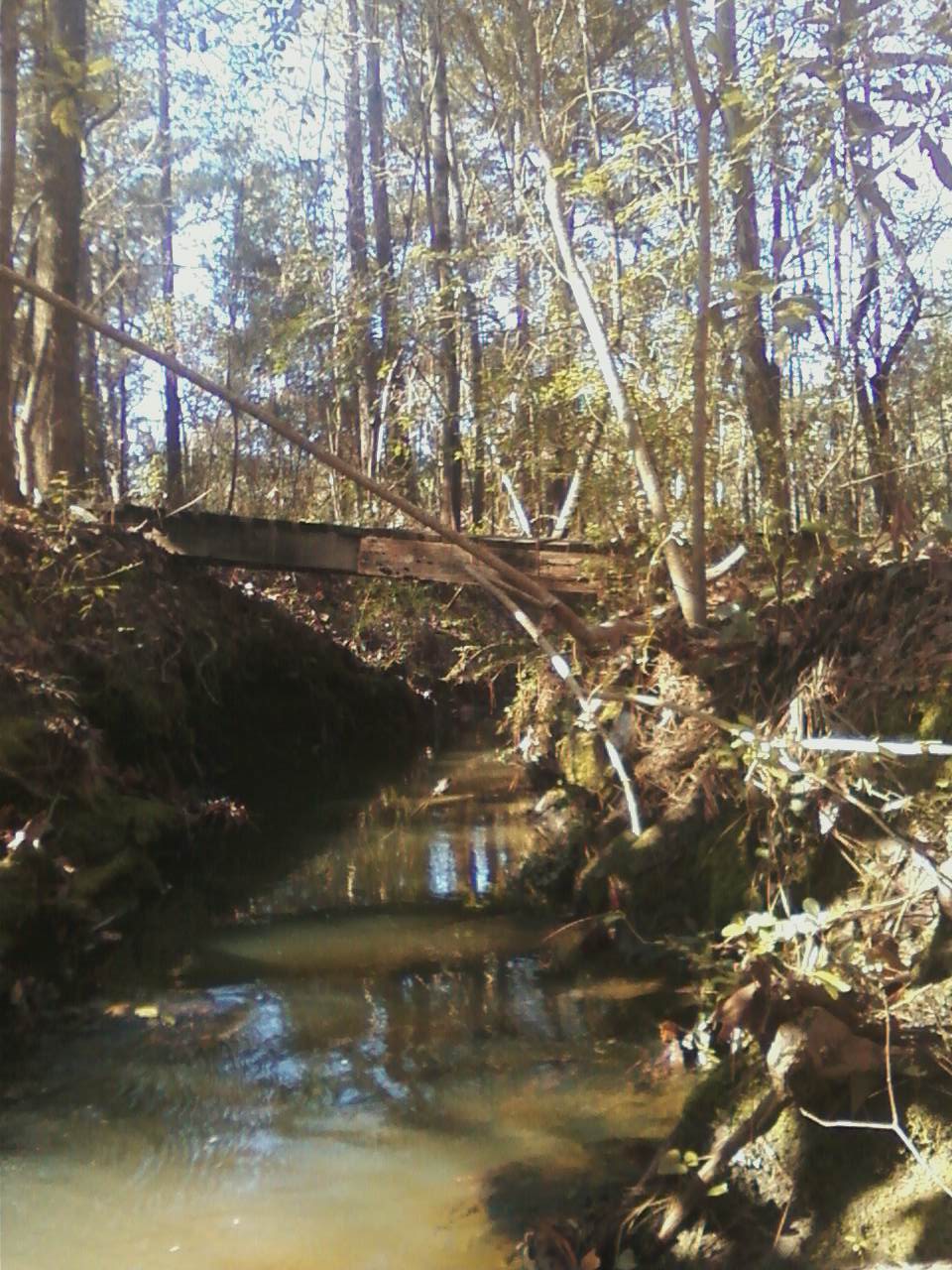
On the same week that I published a post about the one-armed explorer and Western visionary John Wesley Powell, I have been rendered temporarily one-armed myself, for all practical purposes, by a biking accident falling off this bridge:
And while I ended up taking drugs (Oxycodone) because of biking, I spent three of my more coherent hours of the last 48 watching my fellow testicular cancer survivor talk to Oprah about drugs and bikes. I will admit that I was one of the suckers who saw in his life an inspirational story, not a great lie created and sustained by a bullying, lying sociopath. (More on this soon as I digest it. For now see The Last Testicular Hero and The Meaning of Lance [the latter essay is pretty embarrassing now])
Last night I woke up around three and sat straight up and yelled “You idiot!” It wasn’t Lance I was addressing but the impulsive, immature 51-year old writer who decided on Thursday, flush with exercise and the full sunshine of a 75 degree winter day, to cross the rickety wooden bridge he never crosses. Halfway across I remembered why, and lost my nerve. I tried to get my feet down but my bike shoes just skittered across the wooden planks. I had enough time, as I arced toward the ground to think “I’m probably going to die now” and the hit I took on my head when landing did nothing to alter that opinion as I waited for the darkness. Really. It Continue reading →
Where Are You Now, John Wesley Powell?
categories: Cocktail Hour
Comments Off on Where Are You Now, John Wesley Powell?
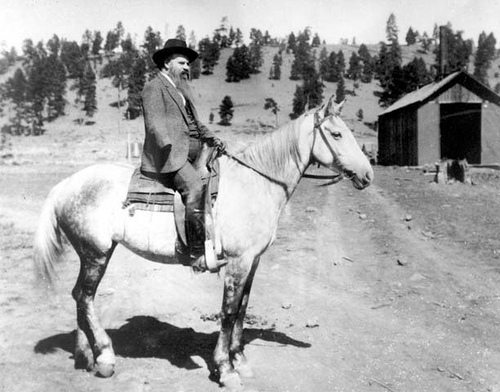 Just posted the below, with a slightly more over-the-top title, at my “Wild Life” blog:
Why We Could Use John Wesley Powell Right Now
Last week a confluence of sorts. I had finally reached the part in the book I’m writing about the American West when I could focus on Major John Wesley Powell. And then, after a couple hours of studying Powell, I went to get my coffee and saw this headline in the New York Times: “Not Even Close: 2012 Was the Hottest Ever in U.S.”
At first glance it might not seem like much of a coincidence. What does the latest overwhelming evidence of climate change have to do with a Civil War veteran most famous for being the first man of European heritage to plunge down the Colorado River?
Well, quite a lot as it turns out. Powell might be best known for running a river in a wooden boat, but it was what he did over the next 20 years that place him right at the top of the pantheon of Western environmental thinkers. What he did was wade into the halls of Congress, in his role as the head of the Geological Survey of the Rocky Mountain Region from 1870 to 1894, and consistently, unflappably, stubbornly, but reasonably, place scientific fact before a body of politicians who practically wallowed in irrationality, self-interest, and superstition. What he did was continue to fly the flag of reason and fact, consistently putting the public good over private interest, despite those who tried to tear him down. And what he did, most of all, was form an over-arching vision of the American West as an arid to semi-arid land where humans, if they were to inhabit it at all, would need to understand certain facts, facts specific to that particular place. Continue reading →
Bad Advice Wednesday: Un-Workshop!
categories: Cocktail Hour
25 comments
 I’ve grown pretty weary of teaching workshops in recent years. There’s a rhythm to them, a sameness, that has started to wear on me. On the other hand, I have a job, and when I was assigned to teach a grad workshop I couldn’t really say: “I’ve grown weary of teaching workshops in recent years.”
So I’ve tried to un-workshop it a little. Below is my rough syllabus, an attempt to come up with a new model, or at least a brief break from the old. I’d like to know if other teachers and students are trying to mess with the old model. I think some messing is long overdue…..
Workshop in Creative Nonfiction
Overview:
This workshop is going to be a bit of a strange beast, really only half workshop, half something else. You will only have one traditional workshop each and therefore only one complete piece required. All of these traditional workshops will occur after the break in the first week in March. The rest of the writing you do will be a series of assignments in different forms during the first half of the class. These will be work-shopped in small groups in the classroom, groups run on more of an editorial model.
This is an experimental class, but it is an experiment with a purpose. For a long time now I have come to believe that the traditional workshop is a pretty limited thing, and that it doesn’t focus enough on really teaching new possibilities, new modes, new types of writing. Continue reading →
The Wired Woods: The Long and the Short of It
categories: Cocktail Hour
3 comments
 So. I am teaching a class this term that focuses on forms, shapes, genres, modes of writing and then the variety of modes within those modes. The bottom line: I don’t think young writers think about shape and form enough. (Though “think” might be the wrong word, and “experiment with” might be better.) Today is our first class and I’m asking them to do something on purpose that I did by accident. What I did was write a 4,500 word essay that was accepted and then “released” by one magazine (for good reasons–they were already publishing “too much Gessner”) and then picked up by another. The catch? In its new home, the essay would be reduced from 4,500 words to 750. It was challenging and fascinating to see if I could do this and keep the essence of the piece. And now I’m asking my students to do the same thing with one of their longer pieces. Once they have done it, I want to ask them what has changed with the smaller form…..how does shape and size affect content?
I’m also asking them to read the draft of the longer piece (posted below) first. And then published piece HERE next. But since you are not in the class you can read it in any order you like. (Or, of course, not at all!)
The Wired Woods (Note different titles.)
“Our lives are frittered away by detail.”— Henry David Thoreau
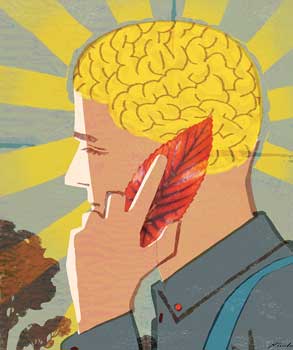
Status Update: Having left my cell phone in the car, I am walking around Flint’s Pond inLexington,Massachusetts, where a guy named Henry used to stroll. For the last three months I have been on something called a book tour, which consists mostly of manically waving my arms around and yelling “Hey, look at me,” and which these days requires almost constant updating of my all-important status on Facebook and Twitter, not to mention my two regular blogs and my website. It seems of vital importance that everyone knows what I am doing at every second. If not….well, if not, then what? Oblivion?
I had only expected to come to Concord for a day, to give a talk at the house where Thoreau was born, but that morning I did a lap around Walden Pond, and that afternoon, after the talk, I decided to tour the home of Ralph Waldo Emerson. The tour was just me and two other people but one of them, a tall man with a prow of a nose, looked remarkably like the bust on the landing at the top of the stairs, and, as it turned out, was Ralph Waldo’s great-great grandson. “From the Maine branch,” he said matter-of-factly, but standing next to him I felt the past was very much present. The next morning, before driving to my radio interview, I visited Continue reading →


Guest contributor: Kristen Keckler
Almost Paradise
categories: Cocktail Hour
4 comments

I’m going to India, where the malaria risk to US travelers is listed on the CDC website as “moderate.” To me, that sounds like “somewhat likely.” As in, a “moderate” drinker is someone who usually doesn’t usually get wasted but is somewhat likely to slip up once a year at an office party. So I looked up a few other countries’ malaria proneness to put this information into perspective, figured out the possible categories of “risk to US travelers” are: none; very low; low; moderate; and high. Other countries that rank as “moderate” alongside India are: Ethiopia, Zimbabwe, Cambodia, Malawi, Zambia, and Pakistan. As opposed to countries like Botswana and Laos, which ranked “very low,” and countries like Papua New Guinea, Nigeria, and Benin, which ranked as lands of mosquito annihilators, or in other words, “high.” Continue reading →